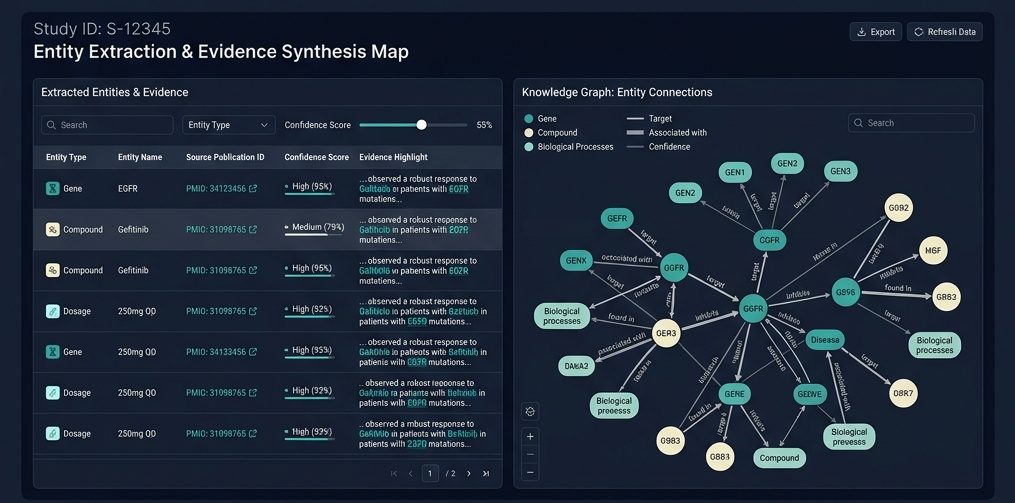
Oniturm Software helps research and product teams transform papers, abstracts, and registry records into source-linked datasets. Our focus is straightforward: normalized identifiers, reviewable extraction outputs, and workflows that stay auditable from ingest to delivery.
Designed for teams that need usable data and a defensible record of where every field came from.
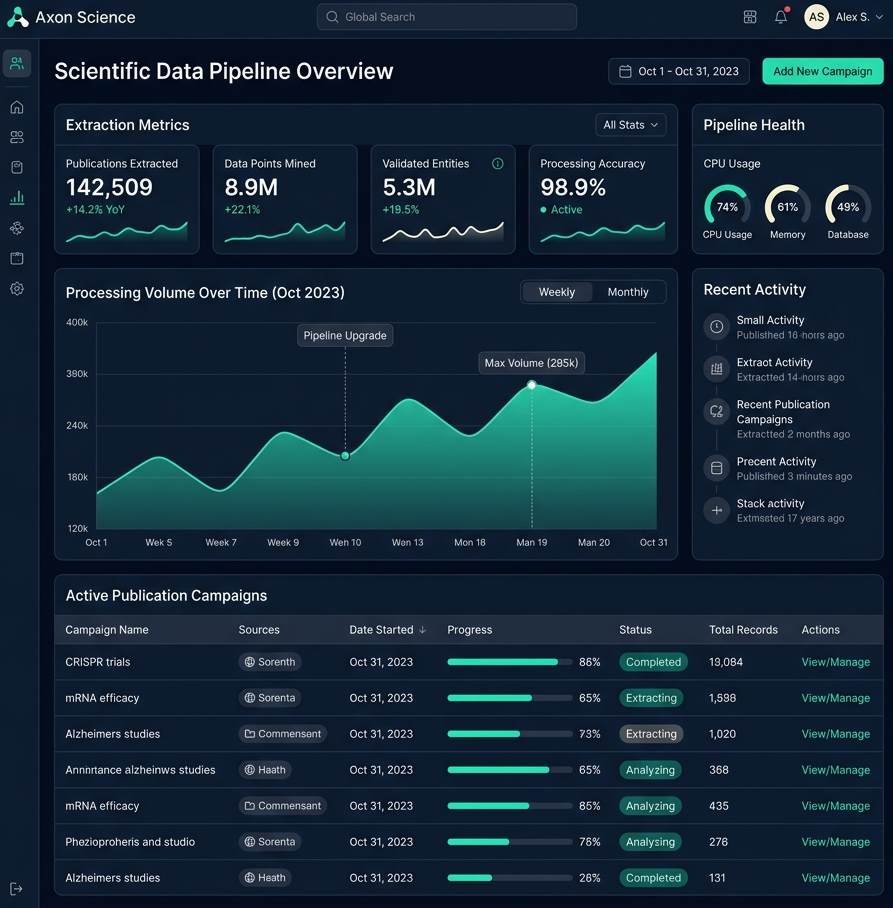
Our platform ingests publication records and transforms them into structured, reviewable, and queryable datasets that can be used downstream without losing source context.
Structured capture of titles, abstracts, metadata, tables, outcomes, and study attributes from scientific documents and registry records.
Identifier-aware normalization across DOI, PMID, PMCID, registry IDs, author records, and domain entities across heterogeneous scholarly sources.
Downstream-ready evidence objects for synthesis, internal review, search, and analytics, with preserved links back to the originating source record.
The strongest trust signal in scientific data systems is not a flashy claim. It is the ability to inspect where a record came from, which identifiers were resolved, what transformations were applied, and where human review entered the workflow.
Keep connections to the original article, abstract page, DOI link, or trial record so downstream users can verify context quickly.
Flag uncertain fields, preserve extracted snippets, and route edge cases into human QA instead of silently flattening ambiguity.
Schema validation, versioned pipelines, and audit logs make it easier to rerun, troubleshoot, and document how a dataset was produced.
Our infrastructure is designed for organizations that care about reproducibility, controlled access, and practical operational clarity across ingestion and delivery.
Role-based access, private environments, and encryption-ready integration patterns for teams with stricter data handling requirements.
Structured APIs and export-friendly data models that fit existing research, analytics, and evidence workflows.
Validation checkpoints, lineage metadata, and observable pipeline steps help teams understand what happened to each record.
Designed to move from pilot collections to broader corpora without changing the core schema and review model.
Oniturm Software is positioned as infrastructure, not as a scientific authority. The goal is to help teams work with publication data in a way that remains inspectable, explainable, and operationally useful.
We favor explicit validation and reviewer visibility over opaque automation claims, because downstream decisions depend on data quality.
Publication data is messy. The system is designed to preserve nuance, not erase it for the sake of prettier dashboards.
Useful scientific infrastructure has to coexist with external registries, identifier systems, and internal review processes.
Tell us what sources you rely on, which identifiers matter, and how much provenance your team needs in the final dataset.